News
My mother's back collapsed while I was taking care of her.
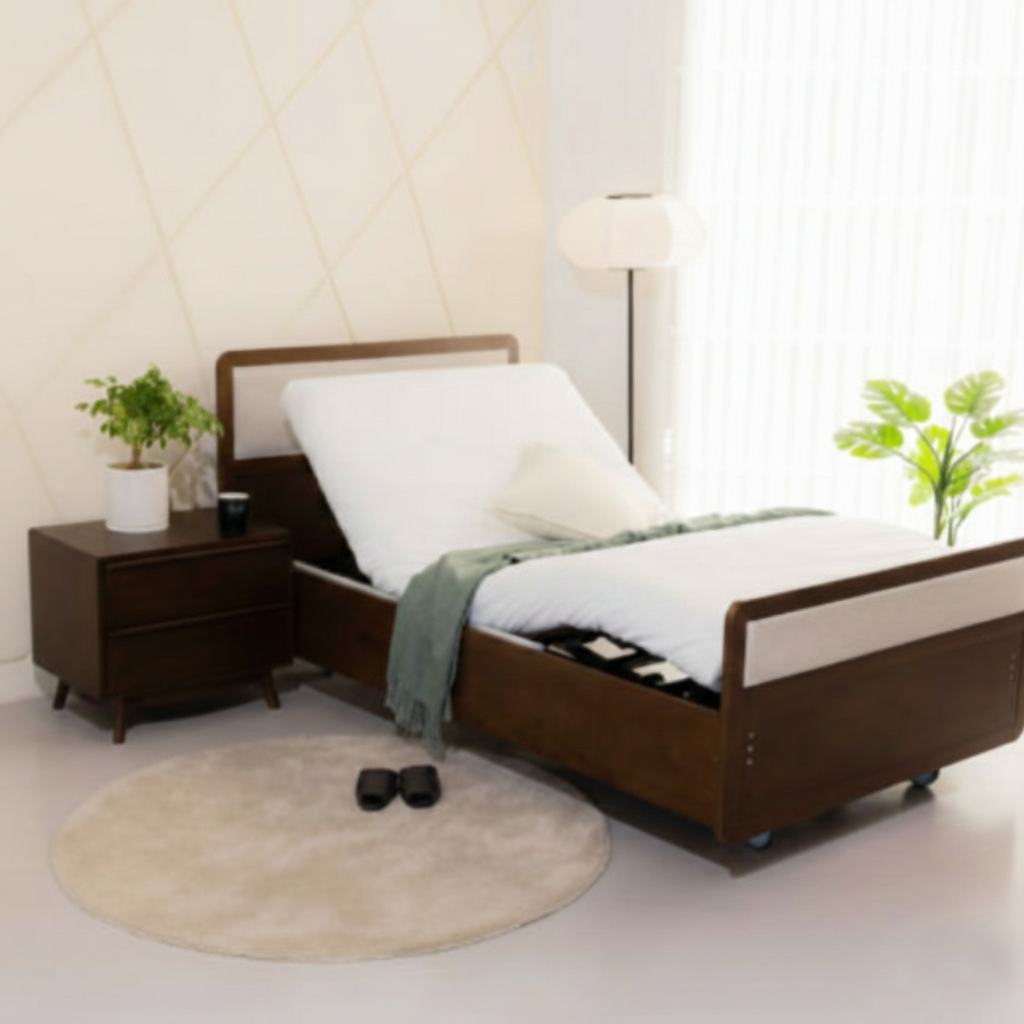
The scene in the drama where Kim Hye-ja struggles to care for Son Seok-gu, who is unable to use his legs, at home is not just a drama. Behind this dedicated care for a loved one lies the reality of the caregiver's physical and mental suffering.
Oh Su-han, CEO of MOBE, a motion bed specialist, emphasizes, "Nursing doesn't end in the hospital; it continues at home." He adds, "True nursing requires comfort not only for the patient but also for the caregiver." We spoke to MOBE The Rest, a home care bed brand that is revolutionizing the "home hospital" in this era of hyper-aging.
◆ Patients Returning Home… The Growing Home Care Market
South Korea is poised to enter a super-aged society by 2025, with people aged 65 and over accounting for over 20% of the population. A shortage of hospital beds, the burden of nursing care costs, and aversion to nursing facilities are all intertwined, leading to a rapid increase in the number of people seeking "home care," where they continue recovery and care at home after hospitalization.
CEO Oh saw a "niche" at this point. The existing bed market was divided between sleep-focused "regular beds" and functional, clunky "hospital beds." For patients seeking home care, they had to either bring in a hospital bed that would ruin their home's interior or endure the arduous task of nursing on a nonfunctional bed. Mobe exploited this gap and launched "Mobe The Rest," a home care brand specializing in connecting healthcare and everyday life, this year.
The development of "Mobe the Rest" stems from CEO Oh's own painful personal history. During the COVID-19 pandemic, he was forced to care for his father, who had difficulty moving, at home. Despite installing a motion bed, he witnessed his mother suffer from back and knee pain due to caregiving.
"Existing motion beds were only comfortable for the patient to lie down on, but they were still arduous work for the caregiver who had to move the patient or change their position. Watching my mother's back collapse, I realized the need for a bed that protects the caregiver's body."
This experience completely transformed the company's product design philosophy. Patient comfort was paramount, and the company began focusing its technological capabilities on reducing the "caregiving burden" for caregivers.
◆ Technology for Caregivers, Design that Eliminates Hospital Beds
"Mobe the Rest" demonstrates its "Made in Korea" technology through its own domestic factory and research center. Key features include ▲convenience for both caregivers and patients ▲home-friendly design.
First, the bed top rotates to optimize wheelchair movement. The bed's height adjustment range (lift) has been significantly expanded to allow caregivers to assist with feeding or change positions without bending over. Furthermore, an "automatic position change" function has been incorporated to alleviate the need to reposition patients throughout the night.
Design-wise, the company focused on eradicating the stigma associated with "patients." Instead of cold metal, the headboard features a warm wood texture, and built-in lighting and USB ports create a home-like appearance. CEO Oh explained, "Patients experience psychological discomfort when they have a hospital bed at home. Therefore, a design that complements the interior design is a reflection of the patient's emotional well-being."
◆ AI and IoT-powered beds dream of becoming a "non-face-to-face medical platform"
Mobe is preparing to move beyond a simple manufacturer and become a "healthcare platform" company. Its "Sleep Sensor" technology, currently under development, detects biometric data such as respiration, heart rate, and weight during sleep and transmits it to an app. It also has the ability to alert patients to emergencies such as falls or apnea at night.
In the future, the company plans to integrate this data with a non-face-to-face medical treatment system, enabling doctors to remotely monitor patients' conditions. Furthermore, "IoT Motion Control" technology, which allows beds to be operated using voice commands, will help patients with mobility difficulties become more independent.
CEO Oh Soo-han stated, "We are not simply a company that sells beds; we are a company that transforms the health and care culture of families. We aim to create a standard for Korean home care beds and present a new model of 'K-care' not only domestically but also globally."
A combination of factors, including a rapidly aging population, changing family structures, the burden of care costs, a shortage of hospital beds, and a reluctance to visit nursing homes, is leading to a rapid increase in patients choosing to stay at home for extended periods rather than in hospitals. This has led to the emergence of the home care market.
Consequently, beds, a key piece of home care furniture, are expanding their role from simply sleeping to serving as a bridge between medical care and daily life. While still small, a leading company has tapped into this niche, targeting this growing demand. This is the home care bed brand "MOBE the Rest," launched this year by motion bed manufacturer MOBE.
- New post
- There is no new post.

Comfortable Care, Deep Rest MOBETHESHEEM
180-2 Seongseok-ro, Ilsan Dong-gu, Goyang-si, Gyeonggi-do (Seongseok-dong) Mobe Co., Ltd
Tel+82-10-4229-9296 Fax+82-31-977-9297 E-mailmobe_motionbed@naver.com


Copyright (c)MOBETHESHEEM. All Rights reserved. Designed by WebSite.co.kr